Showing posts with label language. Show all posts

Monday, 6 November 2017

French Obsessions: Coffee-table books to start French conversations

As a neurotic librophile, I take great pride in showing off beautifully binded, exquisitly hard-covered books that I am passionate about - mainly on the topic of France (French language spruiking to the next level).

Placing some interesting French culture books on my coffee table can inspire some wonderful conversations with friends and family. I have sourced all the delicious hard-back copies of my books on rotation:


As Mireille Guiliano states, it's a book about helping women feel bien dans sa peau. In other words, a book about understanding the true pleasures of eating (that's my mantra!). It's almost a pre-successor of the mindfulness movement or 'slow eating'. I also find that talking about 'French diets' brings up the conversation on French wine - the famous French Paradox. 

The French Paradox concerns the fact that although the French seem to consume a high-fat diet, there is low incidence of heart disease... so maybe c'est grâce au vin rouge, n'est-ce pas? (And all French people crossed their fingers in hope.) Based on studies around this 'catch phrase', the minor study on the Mediterranean diet with "moderate consumption" of wine took hold as social truth for good heart health. To cut a long story short, look up scientist 'Serge Renaud' for a good food chat on this topic.


Just the teacher in me wants everyone to discuss the pure genius of Le Petit Prince. From simple childhood souvenirs to a discussion on how the Little Prince shows us how we have lost our childhood imaginations and our abilities to look beyond our adult restrictions. I no-one at the table has yet read the Little Prince, ask them to draw you a sheep!

It's also a great read for any friends who come over with children. A great chance to read them a passage and share a few beautiful quotes from Saint-Exupery:
"On ne voit bien qu'avec le cœur, l'essentiel est invisible pour les yeux."
"All grown-ups were once children... but only few of them remember it."
“It is the time you have wasted for your rose that makes your rose so important.” 


I came across this book in a second-hand bookstore years ago, and it has been the start of so many great conversations about idiomatic expressions and colloquialisms. 

Some of my favourite topics on French language expressions are the amount of vocabulary around 'cows' - ah la vache, vachement bien, parler comme une vache espagnol...  
How about the French vegetabl-isms. Tu es choux, faire le poireau, être en rang d'oignon...
And finish up by being stood up by un lapin.


Most of us foreigners have a romantic notice of Paris as it has been through history - the gothic architecture, Haussmanian buildings, Hemingway's Paris,  the French Revolution... but what about the revolutionary movements of today?

Especially as a Melbournian, a topic that always come up is the quality of coffee in Paris. The New Paris has a wonderful podcast which interviews local Parisians about new and upcoming issues. Have a listen to the coffee conversation about the new movement in Paris for improving the daily 'grind'.


Everyone loves to discuss stereotypical French dress. From the mariniere, to the beret with boots and a cigarette. It's a beautiful book which talks about the stereotypical modern day Parisian woman from a Parisian woman's perspective, scattered with gorgeous photos, articles and poems. 

However, a conversation on French stereotypes opens a larger conversation on which stereotypes really exist in France. You have the turtleneck and man bag kind of man, to the sports clothes and runners kind of man. The simple-dressed, plain coloured woman, to the high-heeled, fine labelled woman. 


Books from your own French travels


There is nothing quite like your own travel collection to spark a good conversation. On my coffee table at the moment, I have maps of Lyon where my partner and I lived for a year. We have so many fond memories of our time in Lyon, and we just love the city and its beautiful streets. 

Not only do I love the impressionist paintings in the Orsay, but the book comes with a hilarious personal travel story... 

What is on your coffee table?

Sunday, 16 July 2017

Learn fluent French fast... here's where to start.

I get asked by a lot of people about how to start learning French. What are the secrets, what are the tips of the trade. The hardest part about starting a new language is knowing where to... start! The task of taking on a new skill, such as talking in a new language, is nothing less than onerous. Or so you thought.


So this blog is for you, adult language learners. And just for the repeated record, yes you can learn a language to fluency at any age - I get tired of explaining this to people. For now, just understand that it's a big fat lie when you hear that adults can't pick up second language fluency.

Here, i'll lay out some different ways that I advise adults to learn new languages.

STEP 1: The best way to start is to work out why you wish to start learning French.

Learner goal A) I want to learn French because I want to speak with people, and communicate in a different language. This is either because I want to travel to a French speaking country or because I'm interested to talk to people who speak a different language. Or maybe both! (Lucky you!)
Maybe you need it to increase job prospects or to connect with your new French partner (This is a common situation, so many Frenchies in Australia!). Maybe you're a retiree who just wants to work the brain, and practice a new and interesting hobby.

Learner goal B) I'm mainly interested in the logistics behind language and language learning. I love learning about linguistics, and how people can express themselves in languages other than English.
Maybe you feel as though Australia is such a multilingual country that it's time you had some perspective on how people might think in another language.

.... So what's your reason? (Comment below if you wish to share!) I can help you decide whether you're a learner type (A) or a learner type (B). Then move onto the next step to get started ASAP!


STEP 2: Start to learn with both language 'input' and 'output'

Let me start by expressing one main rule of language learning. You need both language 'input' and language 'output' to truly learn any language. What this means is that you need to be learning the language by ways in which most people would consider hearing and listening to a language, and also you need to be using the language through speaking and writing (optional). You constantly need a mix of all these passive and active learning methods at all stages of the language learning to progress. Even right from the get-go!

Now let's look at some different ways that you can learn French in Australia:

Learner goal A) Coucou! You're predominately wanting to learn to SPEAK the language!
We are so lucky in Australia to have so many native French speakers - time to take advantage of the situation!
Meetup language group

Social approach -
Use the combination of a group class scenario along with meetup social groups. There are many organisations and small businesses to choose from (see below for links). Meetup groups are generally a mixture of native speakers and learners of French, if you know which groups to choose from.
This mixture of speaking and learning quickly from natives and advanced learners gives you the opportunity to use the language straight away, and quickly adapt the language based on your initial mistakes. It's one of the best ways to learn a language, in the fluent capacity, but can also be the most daunting as you are forced to drop your guard quickly and embrace your language faux pas.

Solo approach -
Use a combination of one-on-one tutoring with a native French speaker, and join some bi-monthly small French conversation groups. I advise these types of people not to join a group language class, as you will lose yourself within the group and then become way too nervous to open your mouth to speak (which is the opposite to your goal!) Build some confidence within small groups and with native speakers, and you will truly feel yourself flourish in the language. Sometimes you might also like to be immersed in culture by yourself, so attend French events that occur often in your city or visit French cafés and restaurants, and soak in the Frenchness.

Learner goal B) Bonjour, salut, coucou, bienvenue to linguistics. You're predominately wanting to learn the FORM and FUNCTION of the language.

Grammar approach -
I typically find that this group is really in to language apps. Start to delve into apps such as DuoLingo and iTalki on your phone and laptop for some quick knowledge. As group French classes are generally grammar-based, you might also enjoy interacting with people with similar interests in this setting. Hard-copy grammar books that I would recommend are Schaum's Grammar and Easy French Step-by-Step (free copy through link). Both books contain heavy grammar exercises and are in-depth guides to form.
If you're heading back to uni or about to start, the French language courses at most good universities will be enough to tickle your grammar desires.

Allez, c'est parti! We all have to just jump in and start learning!


Links to learning French in Melbourne:
Please comment or email if you need some help to find what's best for you.

Native French tutors -
Gumtree (best way to find a local native and on the cheap)
The French Workshop
VoulezVouloz
Alliance Française de Melbourne

Group classes -
Lyceum Language Centre
Alliance Française
Cosmopoli' French
CAE
French Journey
InLanguage Boutique

Meetups -
Meetup.com
MundoLingo
Language Connection

Conversation groups -
My French Life
Alliance Française
Ask your local French restaurants and cafés as many hold monthly conversation groups


Please comment or email if you need some help to find what's best for you. Bon courage!

Friday, 3 February 2017

Le français: on le parle icitte lè

 Tsé, à Québec y parlent français et c’est correct…

Obviously a three-week stay in the peaceful Canadian province of Québec doesn’t bring you close to mastering Canadian French pantout, and I had a little de la misère with communication. But I had le fun! French Canada is a corner of the globe that truly sweeps you off your feet: both culturally and linguistically. Le Québec, c’est pas pire!


You may be thinking, ‘Why bother learning Canadian French’?  Welcome to the pathway of a French teacher-in-training.  Understanding Canadian French, or le Québecois, means I can teach students about the diverse Francophone world, and truly understand the extent of French linguistic diversity for myself. How fabulous that a small Canadian region, having been conquered by the English over 200 years ago, has managed to preserve such a strong cultural identity and now boasts French as an official language of Canada.

So, what was my personal experience in Québec?
Image you were a foreigner learning English: French-born perhaps, fluent in British or American English, and one day you decide to pack your bags for Australia. On arrival, the accent is foreign, you hear fresh slang and strange expressions, and you feel particularly pompous with your ‘mother country’ adopted accent.
That parallel experience conjures the image my initial shock in Québec! After a few days I started to work out some general accent rules, such as when a word contains the accent circonflexe you hear a diphthong (two-vowels in the one syllable). For example, la fête is pronounced la faite. You also hear some Québec dialects with the rhotic /r/, as found in most Canadian English dialects, however the sound can appear in unexpected places such as the ‘x’ in je peux.  Additionally, the Québecois are more devoted to referencing religion in everyday expressions rather than attending Church, with tabarnak this, and sacré that, but you rather infrequently hear swearing (the contrary of France!). 

The Québecois are also quickly proud to state that they don’t use Anglicism’s such as le parking or le shopping as the French do, but you will hear c’est le fun and c’est cute in nearly every conversation. Their syntax can also be surprising Anglophone with common phrases such as vous allez bien? instead of comment-allez vous? and manger ici instead of manger sur place. ‘Hello’ and ‘bye’ are your colloquial greetings, and daily food times reflect Anglo-Canadian culture with le déjeuner (break-fast), then le lunch (or le dîner), followed by la souper (supper).

The food in Québec was much more Canadian fast food-influenced than I was expecting with dishes such as la poutine (fries with cheese curd). As a local cuisine, I was directed to foods I knew from home, such as le pâté chinois (similar to Shephard’s Pie) and la tourtière (spin on meat loaf). What the cuisine beautifully demonstrates is the immense migrant history of Québec and the reason why the province is so welcoming to refugees and newcomers. Food stores and products might also confuse you as Québec law enforces that all products sold in their province must be labeled in French. Hence why you go for a coffee at Café Starbucks, eat some deep-fried chicken at PFK (Poulet Frit Kentucky), and shop for groceries at Coûtco de gros.


Québec is like your star student: it embraces new ideas, but is equally headstrong and resilient. It contains all the beautiful landscapes and warm-spirited Canadians that you associate with Canada, and speaks of the world through bilingual competency.


If you didn’t have a reason to visit Québec and learn some Québecois before, you do now.


(I went to Québec city in July 2016 for a French teachers course, then spent a few days in Montréal. From there, I spent a week in Toronto for the AIM French Summer Institute.)

Thursday, 1 September 2016

Films that make me dream of France

There is nothing quite like a film set in France - whether it spans the idyllic countryside or captures the grandeur of Haussmann's Paris. Let's be honest, the only reason I ever watch the Tour de France is to transport myself to the quaint villages they pass through, picturing myself wandering through the cobble stones and tearing off the quignon d'une baguette. Whenever I feel la nostalgie, I satisfy my French craving by watching a film that glorifies the French terrain. Romantic and subtle, as if looking through an Impressionist painting, or through Piaf's rose-coloured glasses. These 14 films will make you want to jump on a plane to France tout de suite...

Il n'y a rien de tel qu'un film tourné en France - soit à la campagne idyllique, soit à Paris dans toute la splendeur de Haussmann. De toute façon, la seule raison pour laquelle je regarde le Tour de France, c'est pour me faire transporter aux petits villages au charme désuet, où je peux créer l'image de flâner dans les rues pavées en mangeant le quignon d'une baguette. Chaque fois que j'ai ce type de nostalgie, je regarde un film qui glorifie le terrain français pour que je puis satisfaire mon appétit. L'appétit pour les images romantiques et subtils, comme une peinture d'impressionnisme, ou la vie en rose de Piaf. Surtout, les 14 films suivants m'encouragent à partir tout de suite pour la France ...

Un: Amélie (Le fabuleux destin d'Amélie Poulain)

Amelie - le fabuleux destin d'amelie poulain french film

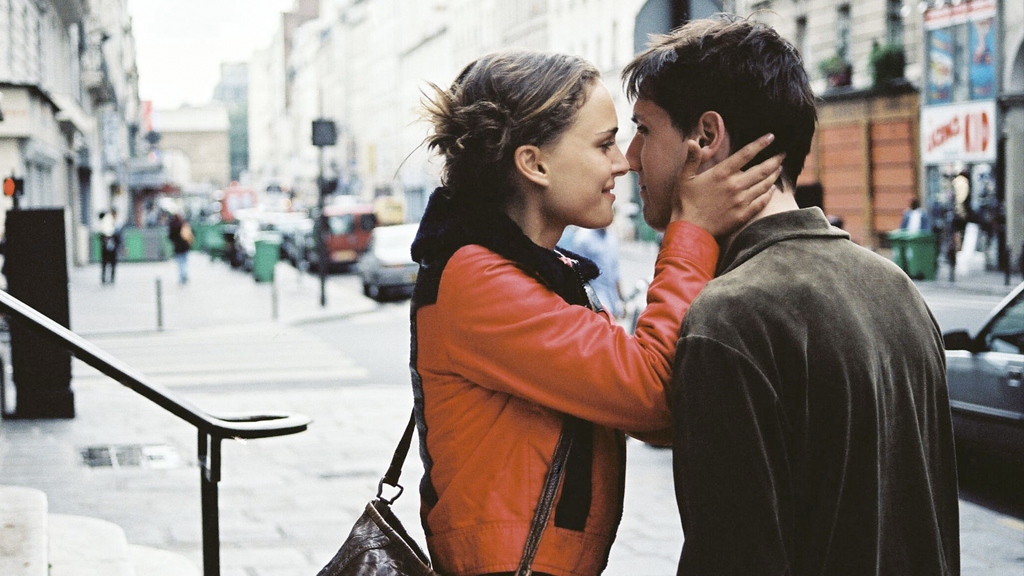
There is nothing quite like the Paris in Amélie. Constant reds and greens with a sepia overtone make you dream of a Paris that only exists in dreams. Much like the dreams of Amélie, a young Parisienne waitress, who attempts to change the lives of those around her.

Scenery to watch: Parisian apartments, Parisian bistros, Montmartre


Deux: Midnight in Paris

Midnight in Paris film set in Paris France

Through the eyes of the main protagonist Gill Pender (Owen Wilson), you see the fine juxtaposition of the old and new Paris, usually at night or even more splendid... in the rain. All thoughts of a writer's Parisian 1920's utopia is brought to life where the Fitzgerald's, Stein, Porter, and Hemingway show Paris as it once was.

Scenery to watch: 1920-styled Parisian parties and bars, Saint-Ouen flea market


Trois: Paris, Je T'aime

Paris, je t'aime set in Paris

It's hard to find a film that shows off more of the Parisian boulevards than this... 'Paris, je t'aime' is a series of short films portraying the lives of everyday Parisians in different arrondissements made by an array of different directors.

Scenery to watch: Parisian cobblestoned streets, grand boulevards


Quatre: French Kiss

French Kiss set in France with Meg Ryan, Kevin Kline

The first scenes consist of Meg Ryan contained in a room and a plane, but she is soon liberated and unleashed in the vast, green French countryside. Filmed in many the idyllic location; Paris, Cannes, and the picturesque region of the Provence-Alpes-Côtes d'Azur, you will be whisked away by the beauty and romance of both Kevin Kline and the scenery.

Scenery to watch: Southern French vineyards, Côtes d'Azur seaside


Cinq: Before Sunset

Before Sunset film set in Paris

This film immerses you in the bustling streets of Paris as it follows an afternoon of two past lovers as they talk and wander through les rues de Paris. The uncut long scenes make you feel as though you are walking alongside the couple, taking you through romantic areas of cafés, gardens and a bateau mouche.

Scenery to watch: Banks of the River Seine, Shakespeare and Company bookstore


Six: Elevator to the Gallows (L'ascenseur pour l'échafaud)


Jeanne Moreau takes to wandering the streets of Paris often in this film set to the music of Miles Davis. A great policier for it's time, the scenery shows off the new richness of the French industrial era and the Parisian streets in all their natural glory. Filmed in the Nouvelle Vague era, this film uses natural, outdoor light to capture the beauty of a growing city.

Scenery to watch: 1950's Parisian streets, French modernity


Sept: Charade


There is no doubt that Audrey Hepburn brought France to the forefront of the big screen. Charade captures the majestic Technicolour Paris with beautiful walks along the banks of the River Seine while the intrigue continues. Some other films with beautiful French scenery in which Hepburn stars are 'Paris When It Sizzles' and 'Two For The Road'.

Scenery to watch: Banks of the River Seine, glorious Parisian hotels

Huit: Marie Antoinette


Showcasing the glam, the glitz, and the glory. This modern interpretation of Marie Antoinette's history with main actress Kirsten Dunst is a sight for the senses. The film allows the audience to peer into the life of the old French monarchy and experience the majestic Versailles palace and gardens. There are beautiful scenes shot at Marie Antoinette's Estate, Le Petit Trianon, to feast your eyes on.

Scenery to watch: Versailles Palace and gardens, the Petit Trianon


Neuf: Moulin Rouge


Naturally the ridiculousness of Baz Luhrmann's films are ultimately indulgent and fascinatingly beautiful. His portrayal of the Moulin Rouge really gives you a bustling impression of the cabaret in it's 'heyday'. It's luxurious reds and velvets and romantic tunes also help if you are ever standing in front of the Moulin Rouge today on the touristy streets of Montmartre. Sing a little tune from Moulin Rouge and you can almost picture Toulouse Lautrec entering for a good night of painting and... well ooh la la.

Scenery to watch: Moulin Rouge, views from Montmartre


Dix: The Hundred Foot Journey


Just how you imagine every tiny French village to be; beautiful and intolerant. The film captures the beauty of an Indian immigrant family who move to France to open a restaurant, and the film develops a beautiful composition of food and family in the French countryside.

Scenery to watch: towns in the Midi-Pyrénées, sweeping country roads


Onze: Ratatouille


A film that makes you melt inside like an oozing raclette cheese. Even though an animated film, this movie beautifully portrays the daily life of a chef in Paris through the eyes of a cute Parisian mouse. The connection of food and French nostalgia is also tied together through a Proust Madeleine-esque moment.

Scenery to watch: wide-shots of Paris, French restaurant kitchens


Douze: A Very Long Engagement (Un long dimanche de fiançailles)


Set in wartime France, mainly in rugged Brittany, this film follows the life of a poor country girl waiting and searching for her long-lost love. Beautiful scenes of northern France with warm sepia browns and deep green forest will transport you to the harsh but serene moments of WWI.

Scenery to watch: Cliffs in Brittany, French country homestead


Treize: The Bélier Family (La famille Bélier)


Just another glorious regional setting in the captivating French countryside. A heart-moving story of the eldest daughter who, indispensible to her deaf family, desires to move to Paris to study music. The scenes revolve around the picturesque family farm and the small community group in town and at the local school.

Scenery to watch: French farms, small town food markets

Quatorze: Chocolat


A romantic vision of a small town filled with chocolate love and... Johnny Depp. There's the quaint little chocolate shop with a gorgeous terrace, the idyllic small French village on the river's edge, and dresses to die for.

Scenery to watch: French chocolate shop, small French stone village

________________________

Which films would you add?
Quels films ajouteriez-vous?